Friday, August 31, 2012

The Search for X

Operation X-Sheva Apelbaum

Just a couple of weeks ago, I went abroad for a short vacation. The day before I left, I found out that one of my friends—and for the sake of this blog post I will refer to her as “X”—was also traveling to the same destination. I was excited! I texted and called her in an effort to find a way to meet up with her when we got there, but it was no use. She didn’t answer me. I could only assume that she had already left for her trip and wasn’t reachable.

When I got to my destination, I forgot about my friend…until one evening during dinner, my dad brought up the topic and suggested that it would be a good exercise in sleuthing to try to locate her. So I donned my detective’s hat, grabbed my virtual pipe, and got to work. At first, I didn’t know where to start. I mean, finding someone in a foreign country with neither information nor sources is not an easy task.

After some brainstorming, I decided to:
  1. Contact a few of our mutual friends to see if they knew where she was
  2. Locate her social media pages to see if she had posted any travel details
  3. Try to find her parent's information online and try contacting them
  4. Find out which community center she belonged to, locate the phone number, and find out if they have they have a tour group traveling to the country
I emailed about a dozen friends asking if they knew what X was doing this summer and if they knew to which community center she belonged.  From my internet research, I found no social media postings, but I did manage to discover that her mother worked at a local community center. Aha! I finally had my first lead.

Shortly after that, I received an email response from one of our fiends confirming that X was a member of the same community center where her mother worked.  “Perfect!” I thought. All I needed was the phone number and that wasn’t so hard to get thanks to Google.  I called the administrative office of the community center and asked them if they could give me X’s contact information.  No luck, they wouldn't release any details. After much pleading and a plausible explanation as to why I would be interested in the information, however, they did confirm that they had a group abroad but wouldn't give me the information as to where they were staying.

Armed with this much information, I decided to use a brute force attack approach. I called all the major hotels and asked if they had a tour group visiting from the city X is from. On the 6th such call, I struck gold.  The hotel receptionist confirmed that such a group had arrived several days earlier and they were indeed staying at that hotel. I gave her my friend's last name and I easily got her room’s phone number. I was on a roll and there was no stopping me now!

With my heart beating in my chest, I dialed the number, but the phone just rang and rang. No one picked it up.  I tried again the next morning and this time…she answered! Lo and behold!
“Hi, X” I said, this is Sheva!
Silence on the other side for 5 seconds.
Finally, she came back to life. “Sheva???” she said,  “What on earth? How in the world? Where are you…?” she asked in a clearly stunned voice.

“I’m here on vacation as well,” I said, “I’m a few towns away from you.”  X clearly had difficulty processing the fact that I managed to track her down thousands of miles away from home without having had her phone, email or itinerary.  We chatted for a few minutes and it was great. Unfortunately, we discovered that our schedules would not be able to align and we could not meet, but it was great being able to talk to her by phone nevertheless.

As we were about to hang up, she told me it was incredible that I was able to locate her..  “It’s elementary, my dear X!”, I replied.

Thursday, February 16, 2012

Time for Braces!

Sheva Apelbaum My New Braces
I’ve tried guerrilla warfare,  Machiavellian scheming and plotting, shuttle diplomacy, and even passive resistance, but I lost the battle against my crooked teeth.  I knew that I would eventually have to get some form of orthodontics. After having had a few different expanders, I finally got braces.
The day I got them, I had to leave school early. It only took an hour to put them on.  The most difficult part was having to keep my mouth open for a long time while they painted my teeth with a glue and then they stuck the braces brackets on. When I was done with all of that, they let me pick a color to insert into my braces to make them colorful. I picked silver because I didn’t want it to be too colorful.

On the way home, my mom started to wonder out loud about how early in history had people made attempts to correct misaligned teeth and about dentistry in general. She asked me if I knew anything about the history of orthodontics or oral implants. I said that I didn’t know much about it, so she told me I should do some research.  So I did and in the process, I learned a few really interesting facts. Prepare to be amazed.  It turns out that the history of orthodontics, implants, and false teeth goes back a long way—possibly as far back as 4,000 years ago!

Sheva Apelbaum Ancient Egyptian Dental Work

Since ancient times, people have been trying to find ways to fix crooked and missing teeth. The earliest evidence we have is an amazingly detailed dental work on a mummy that archaeologists have dated to 2000 BCE.  The work shows intricate gold work around the teeth. This mummy was found with two donor teeth that had holes drilled into them. Wires were strung through the holes and then around the neighboring teeth. Presumably, when the wires were to have been removed, the teeth would have looked more or less straight.

Phoenician denture, c 1000-210 BC.

Almost a thousand years later, the Phoenicians practiced a similar technique. They made dentures from a variety of materials.  We have evidence of such work dating back as early as 1000 BCE.

Sheva Apelbaum Tooth implantation in a Mayan man Sheva Apelbaum Implantation of colored stones in the teeth of a Mayan girl

Evidence of dental practice was also found in the new world. In the Americas, archeologists uncovered evidence showing that the Mayans used both implants and decorative enhancements to the teeth for the young and old as early as the 9th century BCE.

Sheva Apelbaum False teeth made by the Etruscans
The Etruscans, who predated the Romans, practiced making dentures and implants as early as the 7th century BCE.  They used gold wires, gold strips, and gold rivets in their intricate dentistry.
Sheva Apelbaum Ancient Roman bridges

During the Roman period (5th BCE –4th CE), crowns and bridges were manufactured from gold strips and were attached to existing teeth with great precision.

During the Middle Ages, written records indicate that people used metal brackets on their teeth to straighten them.

Sheva Apelbaum Washington's Teeth

During the 18th century, dentures, implants, and orthodontics of other kinds continued to advance and each became a specialty field.  But clearly, they were still far from the level of sophistication that our modern orthodontics show, as we can surmise from George Washington's correspondence with his dentist John Greenwood:
Philadelphia
20 Jan. 1797

Dear Sir
I must again resort to you for assistance.- The teeth herewith enclosed have by degrees worked loose and, at length, two or three of them have given way altogether.  I send them to you to be repaired, if they are susceptible of it; if not, then for the purpose of substituting others. - I would thank you for returning them as soon as possible for although I now make use of another sett, they are both uneasy in my mouth and bulge my lips out in such a manner as to make them appear considerably swelled.

You will perceive at the first view, that one cause of these teeth giving way is for want of a proper socket for the root part to rest in, as were for the purpose of keeping them firm and in place at bottom, as to preserve them against the effect of the saliva which softens the part that formerly was covered by the gums and afforded them nourishment,
Whether this remedy can be applied to the present sett I know not, for nothing must be done to them, which will in the least degree force the lips more than they now do, as it does this too much already; but if both upper and lower teeth were to incline inwards more, it would shew the shape of the mouth better, and not be the worse in any other respect.
Send with the teeth, springs about a foot in length, but not cut; and about double that length of a tough gold wire, of the size you see with the teeth, for fastening the springs.- Accompany the whole with your account, and the amount will be immediately sent by Post in a bank note.
I am Sir
Your very H'ble Servant

George Washington
Sheva Apelbaum George Washington's Signiture
Sheva Apelbaum 19th century dentures

Sophisticated orthodontic practices didn’t begin officially until the late 1800’s.  In 1819, a dentist named Delabarre invented the wire that resembles the one we use today. The wire is the main component used in straightening teeth. It pulls the teeth together and when that happens, the teeth become loosened somewhat from the gums and move into their correct position.
Today, there are different types of braces: traditional metal braces, invisible wire braces, and Invisalign braces. Invisalign is a piece of clear plastic molded to fit your mouth that moves your teeth into their correct place. They are more subtle in appearance and don’t affect a person’s smile quite as much as metal braces.

Many Americans chose to wear braces to straighten their teeth, but this is not a universal practice. Braces have even come to be considered fashionable and now they come in a variety of colors and designs.

I only have half of my braces on so far, but I will be getting braces on the rest of my teeth soon. As strange as it may sound, I’m excited to get them on.
Let the two year countdown begin!

Sunday, October 2, 2011

The Message in the WD Drive Heat Vents

Sheva Apelbaum WW II Morse Code Operator

I have been using a WD My World Book Edition II external hard drive for my photographs, music, and movies file storage.  It has been a great and reliable hard drive up until recently when it decided that it no longer wanted to power up.

WD My World Book Edition II

My dad and I tried to troubleshoot it, but after some work, we found out that it was most likely that the internal power supply was failing.  Unfortunately, it turns out that Western Digital, the manufacturer of the drive, no longer makes replacement parts for it. I figured that it would be a shame to just throw it out so we decided to just put it on a shelf, and there it stayed for several months.

Every day, I would walk by it and look at the cooling vent holes on the back of it.  Last week, I noticed that the vent holes are one of two types:

1. Round holes, and
2. Dashes (with various spaces between them)

I have been studying for a HAM Radio license and suddenly it occurred to me that these holes looked exactly like Morse code markings.  I took a closer look at the drive and, sure enough, it was covered on all three sides with these markings.  After closer examination, I saw that some of the groups of symbols appeared to repeat themselves.

Was it possible that Western Digital used these cooling vent holes to encode a Morse message onto the drive?  There was only one way to find out!

456 

I took a picture of my drive on all three sides and started to decode it.  I first tried to decipher each side independently, but I couldn’t make any sense of it that way.  I then tried reading the text  from top to bottom and backwards, but I still had no luck.  Finally, I tried connecting text on all three sides together and read them as a single message (using a single dot as a word separator, or space).  When I reached the end of the line, I just wrapped it to the next line.

.--. . .-. ... --- -. .- .-.. ... .. -- .--. .-.. . .-. . .-.. .. .- -... .-.. . .. -. -. --- ...- .- - .. ...- . -.. . ... .. --. -. .. -. -. --- ...- .- - .. ...- . -.. . ... .. --. -. ... .. -- .--. .-.. . .--. . .-. ... --- -. .- .-.. .-. . .-.. .. .- -... .-.. . ... .. -- .--. .-.. . .. -. -. --- ...- .- - .. ...- . .--. . .-. ... --- -. .- .-.. .-. . .-.. .. .- -... .-.. . .--. . .-. ... --- -. .- .-.. ... .. -- . .--. .-.. . .-. . .-.. .. .- -... .-.. . .. -. -. --- ...- .- - .. ...- . -.. . ... .. --. -. .. -. -. --- ...- .- - .. ...- . -.. . ... .. --. -. ... .. -- .--. .-.. . .--. . .-. ... --- -. .- .-.. .-. . .-.. .. .- -... .-.. . ... .. -- .--. .-.. . .. -. -. --- ...- .- - .. ...- . .. -. -. --- ...- .- - .. ...- . -.. . ... .. --. -. .--. . .-. ... --- -. .- .-.. .--. . .-. ... --- -. .- .-.. .--. . .-. ... --- -. .-.. -.. . ... .. --. -.

I struck gold!  Before my very eyes, a message started to appear:  PERSONALSIMPLERELIABLE… I immediately recognized the first-word “Personal”, then “Simple”, then “Reliable”, etc.

Sheva Apelbaum Morse Code

After 30 minutes of decoding, I had the entire message:

PERSONALSIMPLERELIABLEINNOVATIVEDESIGNINNOVATIVEDESIGNSIMPLEPERSONALRELIABLESIMPLEINNOVATIVEPERSONALRELIABLEPERSONALSIMEPLERELIABLEINNOVATIVEDESIGNINNOVATIVEDESIGNSIMPLEPERSONALRELIABLESIMPLEINNOVATIVEINNOVATIVEDESIGNPERSONALPERSONALPERSONLDESIGN

Properly spaced and capitalized, it reads:

Personal-Simple-Reliable-Innovative-Design-Innovative-Design-Simple-Personal-Reliable-Simple-Innovative-Personal-Reliable-Personal-Simple-Reliable-Innovative-Design-Innovative-Design-Simple-Personal-Reliable-Simple-Innovative-Innovative-Design-Personal-Personal-Personal-Design

It was very satisfying to have decoded the message.  Kudos to .-- . -.. for coming up with the idea!

Tuesday, May 24, 2011

Annie’s Greatest Escape Part-1

Annie's Greatest Escape-Sheva Apelbaum
Annie, the resident of room 337, sat and stared at a plastic tray that held a pile of pureed chicken and mashed potatoes. She didn’t feel hungry but with a shaking hand she lifted a spoonful of food and managed to swallow it down. From the neighboring room, she could hear a  TV broadcast of some neverending game show.  She wiped her mouth, leaned back in bed and closed her eyes. Soon she was fast asleep.

The tiny room vanished and turned into a big circus tent. She was 19 again, slender and beautiful.   Tied to a burning rope two hundred feet above the stage, she prepared to perform her famous high wire escape.  The rings master’s voice boomed, “Ladies and gentleman! And now Presenting lovely Annie, in her death-defying act!”

As she struggled to untie her hands, thousands of spectators held their breath in terror. Seconds before the rope burned through, Annie successfully released her legs from the knot, caught the trapeze below her and swung into safety.  The crowd rose to their feet and went wild.  She quickly descended to the stage and bowed to her cheering audience. Back in her dressing room, she was greeted by bouquets of flowers and fans.

While signing an autograph for an admirer, she felt a tap on her shoulder, she turned around and heard the words “time to wake up”.  Instantly, her vibrant dressing room dissolved back into her the dreary nursing home.

The nurse was standing in front of her bed.  “Annie, it’s time for your evening medication. ”
The medication made her drowsy. She didn’t know what the date or time was.  Her mind drifted back to that day not so long ago when everything changed.  She was standing on the driveway next to her house shoveling snow. The snowflakes were coming down in droves; it was cold outside and she wanted to clear the driveway so she could get her car out in the morning.  Suddenly, she felt her ankle giving way as she slipped on the ice.  After that, it all seems to have blurred together…the ambulance, the hospital and then ultimately, the nursing home.

An eternity has passed since then.  Every day, a family member would stop by to visit and check on her. That was nice but she missed her house.  Whenever she would ask to leave this place to go home, she was told that this was her home now because she can no longer take care of herself.  Every discussion always ended with the question “what if she falls again?”  This wasn’t a home. Home is where her memories, her cat, and her books were. 

The TV across the hall came on again. She heard the announcer say:  “And this concludes our screening of the Escape from Alcatraz. Join us next time for an in-depth news report.”  Annie wished that there was some way to turn off that blasted TV.

Wait! Did he say: “Escape from Alcatraz? Fancy that!” Annie thought.  “If someone successfully escaped from the most guarded prison, then why can’t I escape from this nursing home?”  she thought. “I wouldn’t even have to swim through shark infested waters, jump over barbed wire, or duck armed guards.”

A plan slowly started to form in her head.  At 10:00 PM, with all of the residents safely tucked in their beds and the nurses making the evening rounds, Annie started to work on a plan,  there was so much to do and no time to waste.

After breakfast the next morning, Annie wheeled down to the circulation desk. It was time to map the premises.

To be continued…

Sunday, May 15, 2011

NYSSMA 2011

6 Sonatas and Partitas-Sheva Apelbaum

This year has been my 3rd time auditioning for NYSSMA, but this time I played a level 5 piece.  Things have not gone smoothly for me while preparing.

I started preparing my piece 4 months ago, but two months into practicing, my school orchestra teacher discovered that I was working on the wrong piece (it was Johan Sebastian Bach’s Sonata No. 1 Presto which is level 6).  “Wrong piece?” I said, “What do you mean ‘wrong piece’!  It sounds right to me!”

“Sorry honey,” she said, “your piece sounded great, but you will have to prepare for level 5, you can’t skip a level.

So I got over the shock and then quickly got down to preparing. With only a number of weeks to go, I practiced daily.  At the beginning, it was slow going, as you can see from the video below. My tempo was off, I was missing notes, and just couldn’t get my brain around the piece.  Bach is very unforgiving when it comes to mistakes of any sort, so I knew I had to improve fast.
I didn’t think that I would be able to learn the piece well enough to audition.  But my mom kept telling me that it’s all about practicing enough and breaking down the piece to manageable units.  So that’s what I did.

My action plan was:
1.  Learn the notes from beginning to end
2. Work out the difficult transitions and shifts
3. Add dynamics
4. Add vibrato and ornamentation
5. Play it with a metronome
6. Memorize the piece completely
7. Video tape myself and watch to find my mistakes

The days passed by and sure enough the piece got better and better.  Two weeks before the auditions, I was playing for several hours every day.  A week before the audition, I started dreaming about the piece and before falling a sleep, I could play the whole piece in my head air-fingering it.

Just days before the audition, I found a recording of Hillary Hahn performing the piece. She’s excellent! I listed to her play it several times and I picked up several tricks from her.

Then it was finally performance day. We drove to the audition location, which was packed with hundreds of musicians.  Everyone was waiting in the hallway for their turn to get in front of a judge.

NYSSMA 2011-Sheva Apelbaum

In the violin hallway, there was a long line of violin cases sprawled out along the wall which made the whole scene looked like the violins came to life and left their crypts and walked away.

Violin Cases-Sheva Apelbaum

Ten minutes before my audition, I had a banana to help relax my muscles. Before I knew it, it was time to go in.

I entered a large room with a single stand in the middle.  The judge was seated at the table nearby.  He asked me to play 3 scales, to play my piece, and then for everyone’s favorite…to do the sight-reading.  I took a deep breath and did my best.  As soon as I hit the first note, I was magically transferred to a different world. The notes and shifts came naturally and I didn’t even have to think about what I was doing.  It all just happened.

And then the magic was over. I was done! I slowly put the violin down.  When I looked at the judge, he had a smile on his face. He thanked me and I left the room.

Several days later we got a letter in the mail with the scores and the written evaluation.  I read it impatiently and was delighted!

NYSSMA 2011 Score

It really paid off to work so hard and reap the sweet rewards of my practice.  I can’t wait for next year’s NYSSMA auditions. After all I already have a leg up on my new piece!

Thursday, April 28, 2011

Mystery and Intrigue in my Backyard

My Backyard Adventure-Sheva Apelbaum

At the turn of the twentieth century, Germany led the way in almost every area of technological development. One area of great ingenuity and achievement was the field of communications. What many people don’t realize is that almost a hundred years before the invention of the Internet, Germany had a functioning world-wide wireless communication network.


The Telefunken Company World Broadcast Map-Sheva Apelbaum

Map of German World Wide Wireless Network 1913

Just before World War I Germany built a number of transmission stations on land and even used ships to relay the signals from sea.
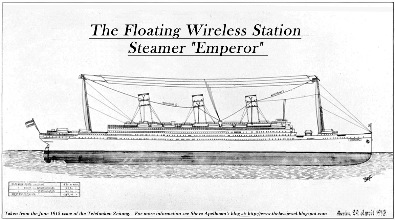
The Telefunken Company Floating Station-Sheva Apelbaum
The Wireless Station Steamer Emperor

Interestingly, I discovered that one of the most important wireless facilities was in my own home town, of all the places in the world!I stumbled upon this discovery completely by chance. While riding in the car one day, I heard on the radio that it was the anniversary of the Zimmermann Telegram. I asked my dad what the Zimmermann Telegram was. He told me that officially, Zimmermann’s Telegram was the excuse that got the U.S. to join in the first World War.

He also said that the message was transmitted through our home town and the whole affair was shrouded in mystery and intrigue. Not being able to resist a good mystery, I decided to check out the station in the hopes that they had a small museum on the site (with original equipment and communications, perhaps?).

I searched our public library; I spoke to neighbors and teachers, and even some older folks who seem to have been around town forever…but everything was a dead end. No one seemed to know specifically where this station was located or even if it ever existed at all.

It was time to dig in and do some real research.  We contacted a number of federal agencies including the NSA, the Department of Justice, the CIA, and the FBI, and we asked for any public records about the Zimmermann Telegram and Sayville.  We also got copies of local historical newspapers from  1903-1917.

After some digging, I got some interesting material from the NSA (mostly related to the actual Zimmermann telegram) and I managed to locate a 1913 postcard of the station.  It showed that the station was located in a large open area.

Sayville Wireless Station Postcard-Sheva Apelbaum

View of the Sayville Wireless Station, Circa 1913

The first recorded discussions of the station suggest that it appeared on the scene in disguise. It started in 1911 when the Stollwerck Brothers, owners of a New York Chocolate Company, purchased seventy-nine acres of land bordering the railroad track in West Sayville.
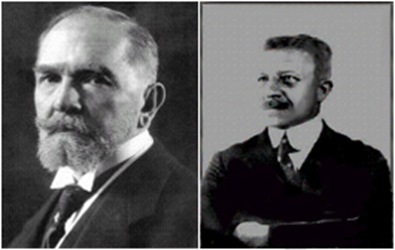
Stollwerck Chocolate-Albert Stollwerck Sayville Telefunken Broadcast Station-Sheva Apelbaum
The Stollwerck Brothers
Stollwercks Enemy Aliens-Sheva Apelbaum
From local news reports, the purchase created a lot of excitement as many local residents hoped they would soon land a dream job at the chocolate  factory. Shortly after the purchase, however, large amounts of equipment and crates all addressed to the Telefunken Company began showing up in Sayville post office.

Sayville Railroad Station 1912-Sheva Apelbaum
The Sayville Train Station Circa 1911

It soon became clear that instead of a chocolate factory, Sayville was about to get some sort of a plant. As time went on, railroad travelers heading in and out of Sayville could look out of the windows and see the construction of a large metal tower in progress right next to the track.

At about this time, the Kensington Hotel had been the center of social life in Sayville. It was located at the northeast corner of Railroad Ave. and Main Street. If you were visiting on business and needed a place to stay, this was surely the place for you. The hotel offered a dining facility, a social room, music, and a place for town residents to get local news.

Kensington Hotel Sayville-Sheva Apelbaum
The Kensington Hotel in Sayville, Circa 1909

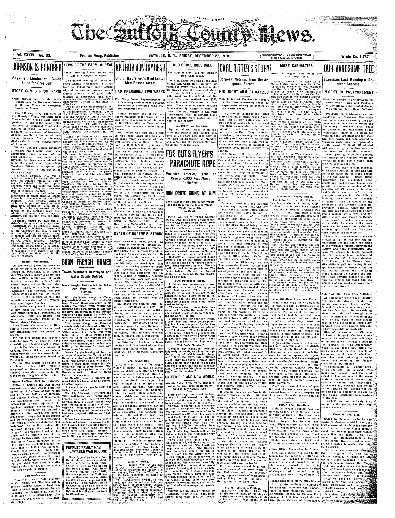
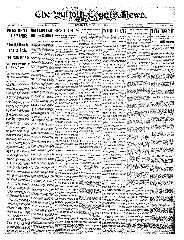
After questioning the local workman who stopped by the Kensington for refreshments, Suffolk News reported that they were digging large holes for concrete piers.

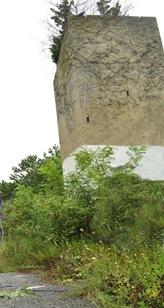
Next, the workers reported that they were erecting 3 large piers 225 feet from the main base in three directions to form a tripod.  Each one of these 3 structures was a large rectangular concrete base about 15 feet square and 30 feet high. Iron anchors were embedded in these piers so they converged over the central foundation at a point 125 feet in the air.
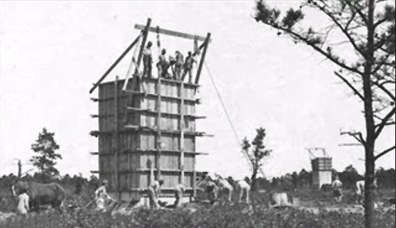
The Telefunken Company Broadcast Station Construction 1911-1912-2 Apelbaum
Concrete Pier at Station Circa 1912

As the construction was progressing, on October 11, 1912, the Suffolk County News reported that an interesting young man and his wife showed up in town and rented a cottage from Mrs.  Mills on Colton Avenue and then from Mr. Hamilton on Handsome Ave. in Sayville.  Mr. Van der Woude turned out to be the chief engineer in charge of all of the station's design work.  Shortly after his arrival he arranged for a local architect (Isaac H. Green) to design the structure and buildings for the wireless station.
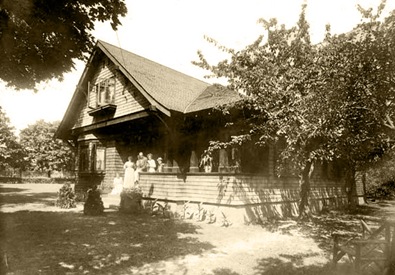
Van der Woude House Handsome Avenue-Sheva Apelbaum 
Cottage on Handsome Ave. in Sayville

Now the developments progressed at a fast pace  and the oystermen working on the Great South Bay could see a large tower rising up in the distance. In December of 1911, it was already about 300 feet tall.
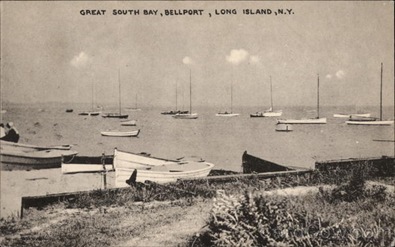
Great South Bay-Sheva Apelbaum
The Great South Bay

After the architectural plans were completed by Green,  William Bason & Sons, a masonry firm from West Sayville, started the construction of the buildings on site. The plan called for a concrete floor, brick foundations and framed structure to house the power plant and a separate structure to house the staff.

The Telefunken Company Broadcast Station Construction 1911-1912-1 Apelbaum
Construction of Antenna and Power Plant, Circa 1913

In early January, 1912, the local residents and newspaper were referring to the wireless station as “ours”. It was also reported that the parent station was located in Nauen, Germany (outskirts of Berlin).  The Nauen station had a massive 640 foot antenna tower (which at the time was the second tallest structure in Europe after the Eifel tower).

Nauen Wireless Station 1918-Sheva Apelbaum
The Wireless Station in Nauen

In July 1912, the Telefunken Company completed the staffing of the station by adding a radio engineer.  On October 18, 1912 the Suffolk County News, reported that “Our Wireless Tower [would transmit messages a distance of 3,500 miles as soon as the construction of the Nauen is completed].”
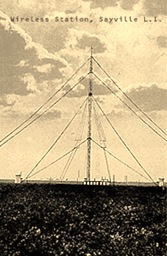
The Telefunken Company Antenna 1914 Sayville-Sheva Apelbaum The Telefunken Broadcast Building 1916 Sayville-Sheva Apelbaum
Station and its Antenna Base in 1913

Telefunken’s Sayville antenna tower was an engineering marvel. The weight of the entire tower rested upon a ball and socket joint, which was supposed to give it great flexibility and the ability to resist the 70-100 mph wind gusts commonly found on the island’s shores.
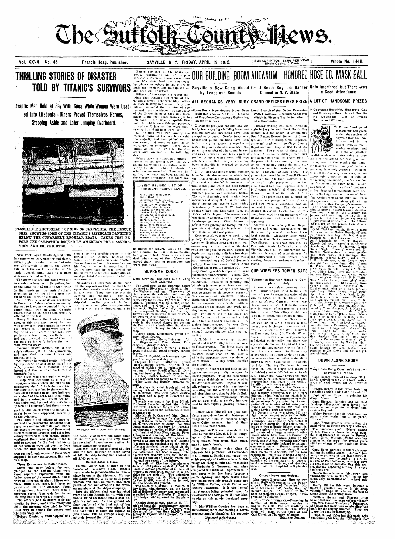

Our Wireless Tower Safe-Sheva Apelbaum

The electrical equipment used in sending and receiving wireless signals was said to have the latest and the greatest in wireless communications.
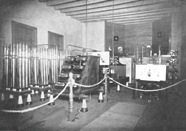
Telefunken Transmitter Room 1912 Sayville -Sheva Apelbaum Telefunken Control Room 1912 Sayville -Sheva Apelbaum
Interior View the Sayville Wireless Power Plant

By the end of January 1913 after almost two years of construction, the station finally became operational. In an official ceremony attended by the representatives of the U.S. Department of Commerce and Labor, a broadcasting demonstration was given by Fritz von der Woude. Despite stormy weather, the guests witnessed firsthand how a message was sent from Sayville to Nauen and back to Sayville.
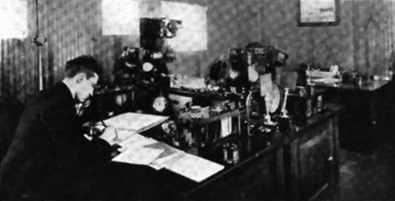
Telefunken Operator 1912 Sayville -Sheva Apelbaum
A Radio Operator in Sayville Station, Circa 1913
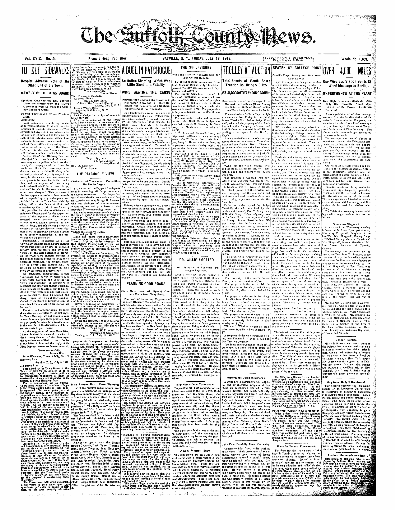
Over 4000 Miles-Sheva Apelbaum
In March 1913, the newspaper reported that the station survived a wind storm that uprooted trees and even blew an express wagon and horse over. In the middle of March, 1913, the New Sun newspaper provided a technical explanation of how the Sayville transmitter worked:

“The Sayville station has in reality two actual wireless stations that operate from the same mast. The majority of the time a wave length of 600 meters is used, this frequency keeps in touch with all vessels within a radius of approximately 2,000 miles. For the extreme long distances, the wave is extended to 2,800 meters and it may even be increased to 5,000 meter. Messages to ships 2,000 miles away can be reached within a few seconds.”

During this time period, one of the main uses of the wireless station was to broadcast daily news updates. Every day at 9:15 PM, the station became a wireless newspaper. The news of the day was summarized and transmitted everywhere, from the equator to the arctic circle.

In August, 1914, World War I broke out in Europe.  By the end of April 1915, Britain cut Germany’s underwater transatlantic telegraph cables. This made Sayville’s wireless station a critical link in the German communication network. As a result of this, Telefunken continued to improve the facility and added an additional 500 foot antenna tower.

In line with its claim of neutrality, the USA started censoring all messages sent out of Sayville. The U.S. navy took up a permanent position in the facility and assigned two censors to it: Lieutenant Francis Cogswell and Daniel Cozzens (who one day mysteriously got electrocuted on the site, but survived).

US censor badly burned-Sheva Apelbaum Closer Sayville Censorship-Sheva Apelbaum

The U.S. naval operators were to monitor the station in order to insure that no encrypted military messages were being transmitted. On June 7, 1915, Charles Apgar, a private citizen who invented a device to capture wireless transmissions, started recording Sayville station’s messages and sent them to the U.S. Secret Service. Based on the contents of these coded messages, in July, 1915, the U.S. Government finally ordered United States personnel to take over the station management.

At this time, according to some newspaper reports, a Sayville justice of the Peace, Daniel White who lived at the Kensington Hotel, noticed that Daniel Cozzens, one of the two US Navy men responsible for censoring the messages at the station, was  being treated to lavish meals by the German wireless operators.

Mr. White claimed that Mr. Cozzens was partying all night and then sleeping until noon. White (who was either envious for not being invited or not busy enough doing his daily job) connected Cozzens’ laziness with the sinking of the Lusitania, which was torpedoed by a German submarine in May of that year.

Lusitania Sinking
Mr. White confided in his personal friend, Francis Hoag the editor of the Suffolk County News, and told him about the evil that was taking place at the Kensington Hotel. White said:

“…They [the German wireless operators] seem to be on the friendliest terms with the young Navy man and buy drinks for him, often late at night with the results that sometimes he doesn’t get around until nearly noon the next day and even then he has plenty of time to go out in automobiles and play tennis with the girls around town.”

In what appears to be a well orchestrated and well timed media blitz, a story about the night adventures of Mr. Cozzens suddenly appeared in the Tribune newspaper. By the second week of June 1915, Cozzens was relieved of his responsibilities and the censorship at the station was increased.
Rumors (most likely spread by British agents and sympathizers) continued to circulate in the local newspapers about the traitorous nature of the Sayville wireless station.

On April 20, 1916, in what was a clear indication of the U.S. decision to side with the allies, Secretary of the Navy Daniels issued a statement saying that it had been decided to strengthen the guard at all German wireless stations in the U.S. including Sayville and the New Jersey facilities.
In April 21, 1916, the Suffolk County News reported the arrival of a company of twenty-one Marines under Sergeant Smith, who had been sent to guard the wireless station.  

“They were husky, business like looking lads in service uniform and heavy marching order, with cartridge belts filled with ammunition and toting all their hardware...”
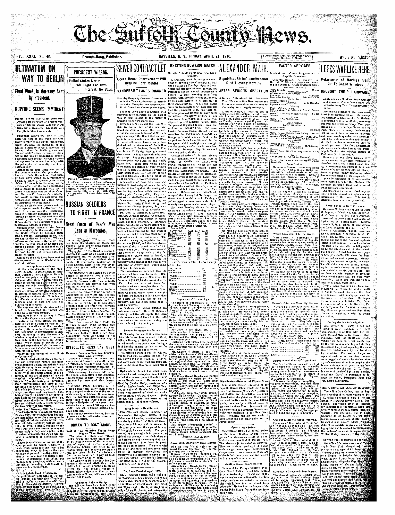
Looks Warlike Here-Sheva Apelbaum
In February, 1917, all German personnel were ordered off the station grounds. The Atlantic Communications Company, the U.S. partner of the Telefunken Company, moved the station operators to their New York City office. The station then was taken over by a United States Navy crew.
On January 19, 1917, German Foreign Secretary Arthur Zimmermann sent a telegram to the German Ambassador to the U.S., Joann von Bernstorff, with instructions to forward it to Heinrich von Eckardt, the German Ambassador in Mexico.  The telegram described the upcoming plan to begin unrestricted submarine warfare against the allies with the possibility of creating an alliance between Mexico, Japan and Germany.  This communication, which later became known as the Zimmermann Telegram, was transmitted over three routes, including Sayville.

The telegram was allegedly intercepted by British Intelligence and decoded by them (I will discuss some of the issues that I discovered with this claim in another post). On February 24, 1917, its contents were given to the American Ambassador in London, Walter Hines Page. Page forwarded it to President Wilson, who eventually declared war on Germany on April 6, 1917.

After the U.S. joined the war, in a move that was mostly designed for public relations, the wire fence surrounding the Sayville station was electrified, flood lights were placed at key locations, and armed marine guards were set up to patrol the grounds around the clock.

After World War I, the Sayville station was transferred to the charge of MacKay Radio and Telegraph Company. Several years later, it was converted to a remote transmission station for the Federal Aviation Administration. Eventually, in 1938, it was decommissioned.

From my research, I knew that the station was originally located at the west side of town in close proximity to the railroad tracks (passengers reported a large sign that was visible from the train).

The Telefunken Company Antenna 1913-1 Sayville-Sheva Apelbaum
The Sayville Wireless Station View from the Train

I tried looking up some old maps, but had no luck.  Then it hit me, why not use aerial photograph of the area!  I loaded Google earth and in less than one minute, I located an area that could possibly fit the description. We obtained permission to enter the site to take photographs.  Next came the field trip!

Present Day Satellite Image of Telephonken Station-Sheva Apelbaum
Aerial View of the Sayville Wireless Station

I packed my adventure knapsack and with plenty of insect repellent headed out.  After walking for some time, we located an old path.  The area was completely covered with thick brush and pine trees; there were beautiful lush vines growing everywhere.

Flower Bloom-Sheva Apelaum
There were no signs of any buildings or communication equipment.  Using the aerial map and my

GPS, I plotted a course toward the center of the site.  After about 20 minutes of walking, we discovered some old pavement and suddenly ran into a 30 foot tall concrete  pier.  I immediately recognized it as one of the 3 main antenna tower anchors.

Conducting Reconnaissance-Sheva Apelbaum Radio Tower Anchor-Sheva Apelbaum

At that point, we knew that the center of the structure was less than two hundred feet away.  After another dozen feet, we found a forest of piles that were cut down with many concrete blocks mingled among them.

Cables and Pilings-Sheva Apelbaum

Then finally we reached the center of the site.  I looked around and discovered a brick wall and a concrete floor (probably part of the original power plant).  And there it was, at the corner of the concrete floor were several rusted metal boxes with dials and tubes.
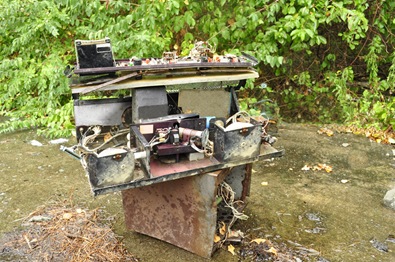
Radio Parts-Sheva Apelbaum

Infamy is strange.  Here was a landmark that at one time was considered the most sophisticated communication facility in the USA, a true engineering marvel.  It cost millions of dollars to build and maintain.  For several years, it was at the center of international intrigue and attention and at one point according to some reports, even controlled the outcome of World War I.

Then one day, it just disappeared from the map, its location and history almost entirely faded from memory.

Sources and Notes:
  1. Historical Long Island images, courtesy The Sayville Library Historic Image Collection of the Sayville library.
  2. Historical newspaper articles, courtesy Suffolk public library archives.
  3. Aerial photograph– Google maps
  4. Constance Currie and her great articles about the history of Sayville.
* Special thanks to Yael Eshkar for helping me with the German translation of the Telefunken Zeitung publications.